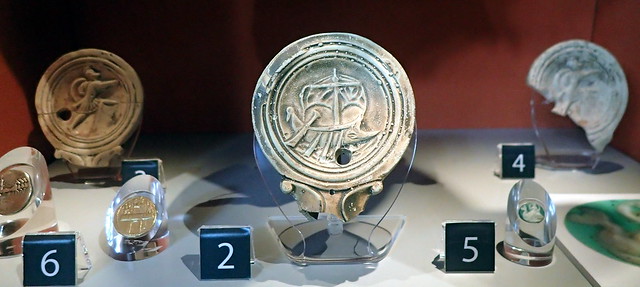
Odyssey of Y Act 8 - Option A Severan Bureaucrat, Romans in Londinium 230 CE

Back to the FutureTime Travel and Haplogroup Index

My yDNA follows the path: L-M20 > M22 > M317 > SK1412 > SK1414 > FGC51041 > FGC51088 > FGC51036. I have been posting episodes detailing events that could have occurred during its 25,000-year journey of development. I traced a journey from its roots in the Zagros and Caucasus mountains to the Levant, culminating in a fictional temple treasurer of Byblos in 64 BCE.

From that point, I have developed two competing hypotheses regarding its leap to the open-field systems of Berkshire. Option A represents the Early Migration or Roman Empire route. In this scenario, my lineage migrates to Londinium, Britannia, via the Romano-Greek colony of Patras and Rome itself, between 180 CE and 205 CE.


A fictional descendant of Phoenician temple treasurers in Byblos had outgrown his Levantine homeland. Seizing the opportunities offered by the Roman Empire, he first relocated to the Greek colony of Patras (Achaia) to bolster his bureaucratic credentials. There, he married a daughter of his Romano-Greek patrons before travelling to Rome itself to receive a new commission.

Septimius Severus (reigned 193–211 CE) was eagerly recruiting administrators from the East to dismantle the entrenched autocracy within his empire. Our ancestor, Aurelius, was keen to advance his career. Yet, once in Rome, he found the appointment to be a formidable challenge—not only for himself but also for his wife and daughter. The posting was Britannia.


The Gateway of Londinium

Home became a town house near the Walbrook stream, a short distance from the massive stone quays of the Thames. To Aurelius’s Greek wife, the docks were a cacophony of damp timber and salted fish—a far cry from her warm home in Achaia. To Aurelius, however, they were his lifeline.

Under Septimius Severus, the province was being transformed into a supply base for the Emperor’s planned campaigns in the North. Aurelius’s days were spent at the Forum, the largest building of its kind north of the Alps, overseeing the arrival of Spanish oil, Gaulish wine, and the local grain destined to feed the legions at Eboracum (York).

On the Road: The Procurement Trail

Aurelius’s duties took him away from the comforts of the capital and onto the straight, paved arteries of Watling Street and the Ermine Way. His task was the annona militaris—the requisitioning of supplies for the army. In the South and East, he met with local civitas leaders; men who styled themselves as Roman senators but still spoke with the lilt of the Belgae or the Iceni. In the ‘palace’ at Fishbourne, he negotiated with regional administrators who were eager to prove their loyalty to the new African Emperor.

The era of independent British kings was largely over, yet the chieftains still held sway over the rural populations. Aurelius had to be a diplomat; he needed their cattle, their leather for tents, and their lead from the Mendip Hills. He carried the authority of an emperor who did not care for tradition. If a local magistrate grumbled about the grain tax, Aurelius reminded them—perhaps with a touch of Levantine wit—that Severus rewarded loyalty but had little patience for the ‘old ways’ of the Italian elite.

The Domestic Struggle

The ‘great challenge’ he had feared in Rome manifested in the small details of daily life. He likely spent a fortune on hypocaust heating, burning endless cords of wood to keep his growing family warm during the ‘perpetual mist’ of the British winter. Whilst he could procure the finest Mediterranean imports for the Governor’s table, his own family had to adapt to local butter instead of olive oil, and the heavy, hopped ales of the North instead of the sweet wines of Achaia.

A Man of Two Worlds

Aurelius was a ‘Severan Man’—a product of a meritocratic, globalised empire. In the morning, he might have offered incense to Mithras or the Syrian Goddess in a small shrine by the London docks; in the afternoon, he was a cold-eyed bureaucrat calculating the weight of British wool.

He was the bridge between the ancient traditions of the East and the raw, developing frontier of the West. He was not just living in Britain; he was building the Roman machinery that kept it pinned to the map of the world.


In 235 CE, on the docks of Londinium, Aurelius heard the news: the assassination of Alexander Severus.

In March of that year, the last of the Syrian line, Alexander Severus, had been murdered by his own troops at Mogontiacum (Mainz, Germany). He was killed alongside his mother, Julia Mamaea—the woman who had effectively governed the Empire. For Aurelius, this was the death of his patron. The new Emperor, Maximinus Thrax, was a career soldier who had risen from the ranks; he had no use for the sophisticated ‘Eastern’ civil administrators favoured by the Severans. To the new regime, men like Aurelius were viewed as ‘palace softies’ who had drained the treasury on bureaucracy rather than the army.

The shift would have been felt instantly in Londinium. Aurelius gathered his family—which now included two daughters and a younger son. They were in grave danger. His only advantage was being among the first to receive the news at the quayside. He acted quickly before his property could be confiscated. Prepared for such a crisis, Aurelius had already formulated an emergency plan: an escape up the Thames with his wealth to a refuge he had kept secret.

Aurelius Belicatus (the son) By 250 CE, Aurelius the senior had passed away, succeeded by his son, Aurelius Belicatus, as head of the household. The farmstead was now developing into a respectable villa. He had married a young, local British wife.


The lineage remained, surviving into the mid-18th century as copyhold tenants. No longer following the imperial bureaucratic rules of movement, the paternal line now adhered to an agricultural rule of stability.

In the villages of the Thames Valley, across the borders of Berkshire and Oxfordshire, the family held their place not by deed, but by the "custom of the manor". Their names were etched into the manorial court rolls, securing their right to the land through generations of quiet husbandry. The ancient Levantine heritage, once carried by soldiers or traders across vast distances, was now tethered to a few acres of English soil—preserved by the very permanence of the feudal tradition.


With each passing generation, the lineage becomes increasingly British, then more specifically English. Few would ever guess at the ancient Asian heritage encoded within the nucleotides of the Y-DNA. That a line of descent has its roots in the Zagros Mountains, and later among the Hurrians and Phoenicians, could remain forgotten for over 1,700 years.

Whether one prefers the "Early Migration" theory or the "Late Migration" narrative—centred on late-medieval Venetian galleys—the genetic reality remains the same. We know that Y-DNA L-M20 > M22 > M317 > SK1412 > SK1414 > FGC51041 > FGC51088 > FGC51036 originated in Western Asia (most likely the Zagros or South Caucasus). It likely moved into the Levant, where it persisted as an uncommon, narrow "ghost" haplogroup. Eventually—whether in antiquity or more recently—it reached Southern Britain, where it remains incredibly rare today.

GO TO NEXT ACT - Option A. Medieval Thames Valley villeins. 1432 CE


Back to the Future: Time Travel and Haplogroup Index

Ovum Act 8 Option B. The Last of the Romano-Britons and the first Anglians. East Anglia 440 CE

Back to the FutureTime Travel and Haplogroup Index

It is now 440 CE in the Tas Valley of what is now called Norfolk, England. My 51-times great-grandmother is a young girl, playing in the ruins of the old city of Venta Icenorum. Other than squatters and salvage-hunters, the city has largely fallen into decay and is mostly deserted.

Her people are Romanistas - Romano-Britons. They are the Christian, Romanised Britons of the 5th century, and they have good reason to pray. It has been more than thirty years since the last legions departed Britannia. The shore forts stand derelict. The economy is in crisis, and their society is shattered.

Her father is a decurion, a local magistrate and landowner. He has witnessed the decline throughout his life. His tenants are restless, their economy still clinging to the memory of the coin, yet they scratch the heavy local soils with light ards that barely bite the earth.

​But a new people are settling these lands, arriving from across the North Sea. Their culture is alien, having evolved free of imperial history. They are industrious workers and brave warriors. They use heavy iron-shod ploughs and brute strength to turn the stubborn clay soils. They rely on barter and tender—trading their surplus products rather than coinage.

​The father is wise. He understands the value of cultivating a strong relationship with these new tenants, mercenaries, and trading partners. They may speak in rough Germanic tongues and worship pagan deities, but they promise a way out of the crisis. These are the early arrivals of a people known as the Angles. They have arrived as mercenaries and pioneers, and have brought a dearth of brides. My 51-times great-grandmother was always destined for an arranged marriage.

Her father had made a wise decision. Her husband's family proved they knew how to get the best out of these difficult soils. Their imported culture inspired the local Romano-Britons; by leading through example, they became the new leaders of the valley.

This AI image visualises the aging couple. They sit at home in a comfortable Anglo-Saxon house. I've asked for a cross section to demonstrate the earth pit basement below the wooden floor. These features left archaeological traces known as SFB (sunken feature building).

My 51-times great-grandmother practices the funerary rites for her husband. The transformation is complete. She began life British, in the Romano-British culture, and ends it English, immersed in the Anglo-Saxon culture.

​Cultures often change, but those who work the soil frequently remain. This underplayed rule applies more so to the women—a rule that can be observed through the mtDNA record.

Rationale

​Recent genomic studies—most notably the 2022 Gretzinger et al. study—suggest a significant genetic turnover in Eastern England, with up to 74% of the ancestry in areas like Norfolk being attributed to Continental Northern European populations.

​At first, this sounds like support for the old 'mass Anglo-Saxon invasion' story of Hengist and Horsa. However, the researchers stress that this immigration event was spread over as much as 600 years, from the early mercenaries up to and including the 9th and 10th-century Danish (Viking) farmers. This represents a long, drawn-out North Sea Immigration Continuum.

​Therefore, integration was often a more peaceful process, occurring one generation at a time. It is easy to see the economic advantage of marrying into North Sea communities. Was there conflict and coercion? I am sure some existed; horror stories based on fact likely served the tabloid-like religious lessons of early monastic historians like Bede.

​These new arrivals—the 74% of East Anglians who conquered the boulder-clay soils—were certainly prominent among my general ancestry. Their mixed descendants, the founders of an English identity, settled in their farmsteads, largely unmoved by the later Norman aristocracy, eventually becoming my high medieval ancestors.

Anglo-Saxon DNA

I have previously blogged details and a summary of recent investigations into Anglo-Saxon DNA in Anglo-Saxon Migration - the latest genetic evidence 2024

Anglo-Saxon copper-alloy brooches, parts of a cruciform brooch or a square-headed brooch recovered by my late father in a field at Morley St Botolph, Norfolk (recorded).

The two options of this early route into Britain (B), and a later Anglo-Saxon entry into Britain (A), now rejoin as we approach the written record.

GO TO NEXT ACT - Late Medieval South Norfolk and the Black Death. 1349 CE


Back to the Future: Time Travel and Haplogroup Index

The Roman Contribution

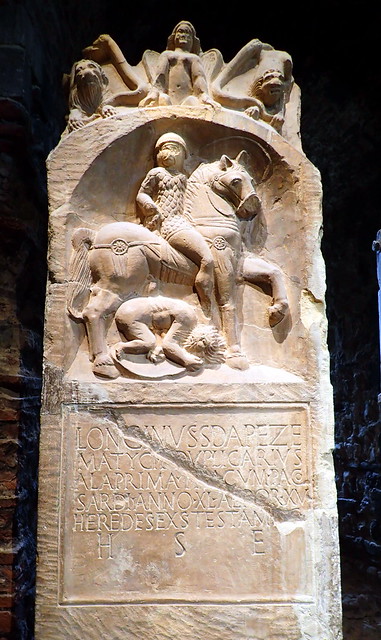
I took the above photo of a Roman tombstone at Colchester.  It's the image of a Roman cavalry officer, ruling over a defeated Briton.  It had apparently been damaged during the following Boadiccan Rebellion.  No doubt the Iceni-led rebels against Roman authority would have found this image a tad humiliating.  The point that I want to make here though, is that the cavalry soldier that this tombstone commemorates, may have been Roman, may have died in South-East Britain, but actually hailed from what is now Bulgaria!

The archaeological and historical evidence suggests that as a foreigner in Roman Britain, he was far from alone.  There are a number of similar stories, that suggest that Roman Britain was visited by many other people from across the empire -  not only people from what is now Italy and Bulgaria, but also from what is now the Netherlands, France, Greece, Syria, Lebanon, Germany, Spain, Tunisia, Algeria and Iraq.  Visitors appear to have included not just military, but merchants, specialists, politicians - they all occasionally stare out at us from the archaeology and histories of Roman Britain.

We know that they were here.

Previous anthropological investigations at Trentholme Drive, in Roman York identified an unusual amount of cranial variation amongst the inhabitants, with some individuals suggested as having originated from the Middle East or North Africa. The current study investigates the validity of this assessment using modern anthropological methods to assess cranial variation in two groups: The Railway and Trentholme Drive. Strontium and oxygen isotope evidence derived from the dentition of 43 of these individuals was combined with the craniometric data to provide information on possible levels of migration and the range of homelands that may be represented. The results of the craniometric analysis indicated that the majority of the York population had European origins, but that 11% of the Trentholme Drive and 12% of The Railway study samples were likely of African decent. Oxygen analysis identified four incomers, three from areas warmer than the UK and one from a cooler or more continental climate. Although based on a relatively small sample of the overall population at York, this multidisciplinary approach made it possible to identify incomers, both men and women, from across the Empire. Evidence for possible second generation migrants was also suggested. The results confirm the presence of a heterogeneous population resident in York and highlight the diversity, rather than the uniformity, of the population in Roman Britain.

Leach, Lewis, Chenery etal 2009

I could have alternatively used more historical evidence of individuals - the General from Tunisia, the Syrian in Northern Britain, with a Southern British born wife, the York woman that appears to have had mixed African ancestry, etc, the recurrent Greek names, the Syrians, Algerians and Iraqis that patrolled Hadrians Wall.  As Charlotte Higgens stated in Under Another Sky, Journeys in Roman Britain 2013:  

"In Roman Britain, you do not have to look far to find traces of people sprung from every corner of the empire.  Because of the Roman's insatiable desire to memoralise their lives and deaths, they left their mark.  Some fell in love, had children, stayed.  Many no doubt to, were brief visitors, posted to Britannia and then off to the next job, in Tunisia, perhaps, or Hungary, or Spain.  In the Yorkshire Museum is an inscription made by a man called Nicomedes, an imperial freedman and probably Greek, to go by the name.  He placed an altar to the tutelary spirit of the provenance - 'Britanniae sanctae', sacred Britannia.  Also in York, a man called Demetrius erected two inscriptions in his native Greek - one to Oceanus and Tethys, the old Titan spirits of the sea; the other to the gods that presided over the governer's headquarters.  The Roman empire was multicultural in the sense that it absorbed people of multiple ethnicities, geographical origins and religions.  But Roman-ness - becoming Roman, living as a Roman - also involved particular and distinctive habits, architecture, food, ways of thinking, language, things that Romans held in common whether they were living in York or in Gaza.".

South east Britain was a part of the Roman empire for no less than 370 years, and was strongly influenced by it both before and after that membership.  That represents quite a few generations, maybe around 12 to 18 generations.  So in AD 410, as locals in Britannia fretted about their Brexit, Germanic immigration, and were petitioning Rome to send the troops back, some of their pretty distant ancestors, had witnessed the arrival of Rome with the Claudian Invasion.  That's a long time for contact and admixture to drip feed.

Did this long membership of the empire leave a genetic signature in Britain?  The current consensus is no!  We have not yet found anything in the British admixture, that can be ascribed to Roman Britain.  Not on an autosomal DNA level.  The given explanation is that the Romano-British admixture experience was so cosmopolitan, and diverse, that no one contributing population managed to leave a lasting signature.  Each case was apt to be washed away by the phenomena of genetic recombination.  It hasn't left a background admix in modern South-East British populations that has yet been detected and recognised.

However, enthusiasts that test their DNA haplogroups do often find results that are not easily explained by conventional British population history.  Odd haplogroups turn up.  My own Y-DNA, L-SK1414, with a Western Asian origin, is just one example.  Perhaps some of these rogue haplogroups in Britain, are a smoking gun of Roman Imperial experience. 

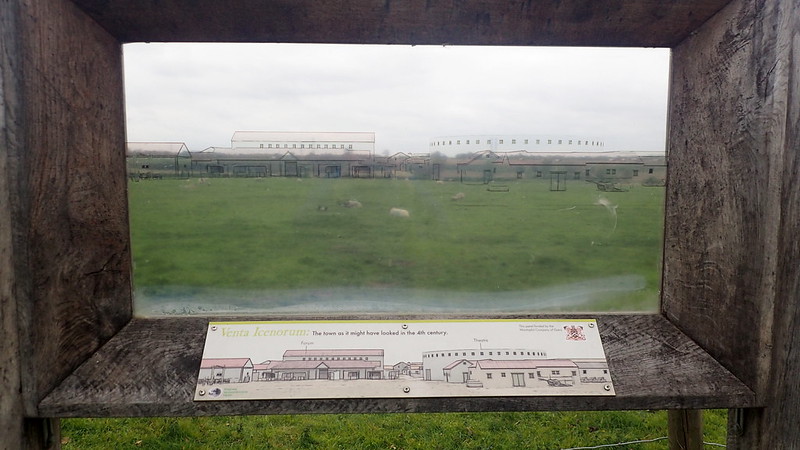
The site of Venta Icenorum here in Norfolk.

The First East Anglians Part I

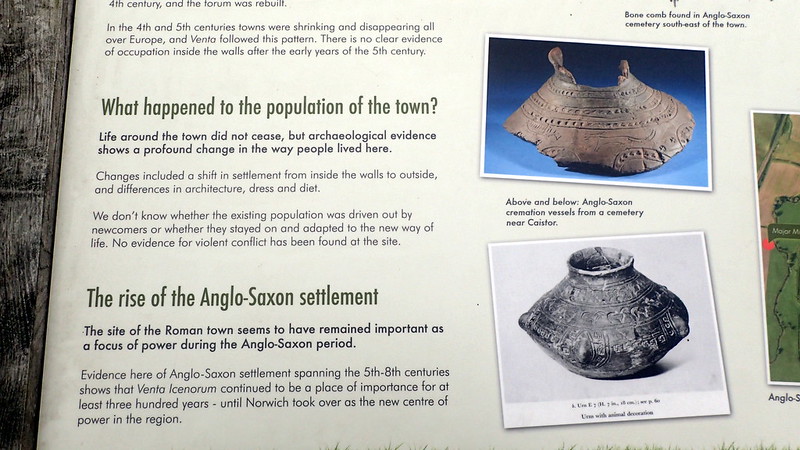
A recent purchase in a Norwich shop, was a used book: The Anglo-Saxon Cemeteries of Caistor-by-Norwich and Markshall Norfolk by J.N.L Myres and Barbara Green.  The Society of Antiquities.  1973.  Caistor-by-Norwich, or as it is also known, Caistor-St Edmund, is located close to the confluence of the River Tas with the River Yare, in East Norfolk.  The Anglo-Saxon cremation urn cemetery there, was built outside of the walls of Venta Icenorum, a Romano-British town.  The book's authors suggest that the cemetery belonged to Anglo-Saxon mercenary soldiers, that were employed to defend the town, and their families that they brought over.  This fits the context of the Anglo-Saxon invasion, as proposed by traditionalist historians that support the accounts made in later centuries by Gildas and by Bede.  In this context, these finds could be suggested to have belonged to the very first East Anglians

I could wax on about it's extensive finds catalogue, and illustrations:

But instead, I'm going to copy here, a passage from the above book that I read this morning, after recieving an email from Stephen Arbon, concerning the Anglo-Saxon settlement of East Anglia.

"The suggested reorganization of the town defences in the third century implies a community still sufficiently large and viable to warrant such an expense.  The enclosure of some 35 acres must indicate that this area was thought worth defending.  Until the whole system is securely dated uncertainty must remain.  But the existence of external bastions does indicate that the defences were probably improved in the later part of the fourth century.  Further evidence for the existence of an adequate defensive system at the time comes from the forum and Building 4.  Five pieces of military equipment of the type associated with barbarian troops of this period have been found on these two sites, while a sixth was included in a nineteenth century collection.  All are late fourth - or early fifth century types and indicate the presence of a military force stationed in or near the town at this time.  A bone sword guard was picked up after ploughing in 1969 in the area of the Baths.  This too can perhaps be associated with the users of the metal objects.  By this time also, if the dating here suggested for the earliest barbarian burials in the Anglo-Saxon cemetery is correct, Germanic folk were already cremating their dead only some 400 yards outside the east gate of Venta.

It may also be significant in this context to note that a number of pieces of so-called 'Romano-Saxon' pottery have been recorded from the Roman town.  One such, unstratified, has already been published; three others are here illustrated on fig. 70.  Pottery of this kind has been held to indicate the impact of Germanic decorative taste on ceramic fashions in the later days of Roman Britain.  It certainly displays motifs that were popular beyond the Roman frontiers at this time; where datable, it occurs mostly in late fourth-century contexts, and its distribution lies mainly in those eastern parts of Britain where the barbarian influence was likely to be felt at the earliest date.  The presence of this hybrid pottery is another piece of evidence for the cultural conditions prevailing at Venta in its final phase.

Caistor is in fact one of the few Roman towns in Britain where Romano-Saxon pottery, late Roman military equipment, and early Germanic cremation cemeteries have all been found in close association.  The relationship between the soldiery to whom the military equipment found in the town belonged and the folk whose cremated remains were buried outside the walls is difficult to determine.  It is most natural to suppose that these finds represent two aspects of the same phenomenon, a body of Germanic mercenaries who in life defended the walls in their final form and in death were buried, in accordance with continuing Roman practice, outside.  If as is suggested by the presence of beads in some of the earliest urns, they had their families with them, they too would have been settled somewhere close at hand.  It may be objected that barbarian irregulars in Roman, or sub-Roman employment would be unlikely to cremate their dead with such persistence as the earliest users of the cemetery appear to have done.  It is true that most cemeteries of Germanic troops that have been recognized in Roman frontier areas on the Continent consist of inhumations, and the well known Dorchester burials are a similar instance in this country.  But it has to be remembered that most of the continental laeti in northern Gaul came of Frankish stock or from related German tribes beyond the Rhine who had long been familiar with Roman ways, while the Angles and Saxons who first settled at Caistor came from regions much further afield in north Germany and southern Scandinavia on which Roman civilization had made little cultural impact.  And, while it is true that no objects of Roman uniform equipment have been recognized in our cremation urns, such instances have been recorded in north German cremation cemeteries, indicating no doubt that individual Saxons who had served in Roman irregular units did sometimes return home to die and be cremated in accordance with their own ancestral customs.  At Caistor and elsewhere in eastern England such folk had fewer opportunities to return home to the Continent: they had come here to stay, and they continued to cremate their dead in their new homeland, unaffected by Romano-British habits, for which, in any case, they probably had some contempt.

The Anglo-Saxon Cemeteries of Caistor-by-Norwich and Markshall Norfolk by J.N.L Myres and Barbara Green.  The Society of Antiquities.  1973. 

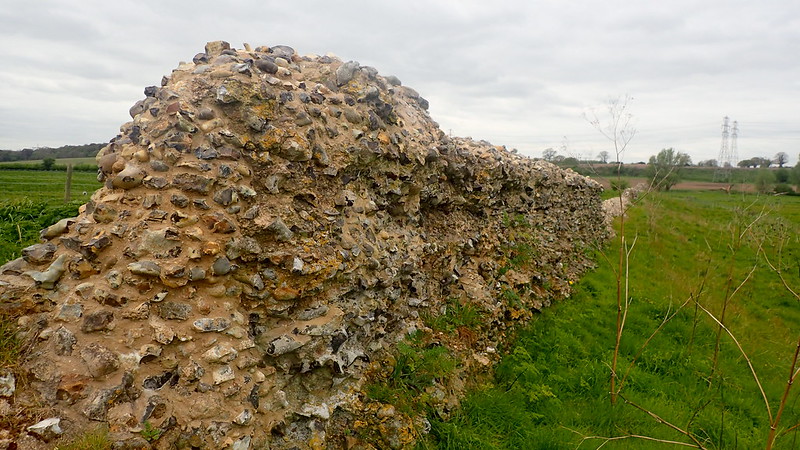
A surviving stretch of Venta's wall at Caistor St Edmund.

An information board at the site of the old Roman town.

Drawing of Romano-British potsherds from a site that I recorded in Thetford Forest many years ago.  The bottom left sherd is of the type known as Romano-Saxon pottery.

In conclusion, I'm not prepared to take sides on this one.  we know that some very early Anglo-Saxon cemeteries surround the old Roman town of Venta Icenorum in Norfolk.  We still don't know with any degree of certainty what was the relationship between the town and these cemeteries. Another Anglo-Saxon cemetery has been found close to the walls of the Roman shore fort nearby at Burgh Castle.  Did they arrive as Gildas indicated, as invited guests and mercenaries?

Roman Colchester

Another of my day trips. Another day off. As a Norfolk bloke, I almost felt as though I was following in the footsteps of the Iceni during the Boudiccan Uprising. I had a good day. One to one tour of the Roman vaults of the old Claudian temple. Here are my photos.


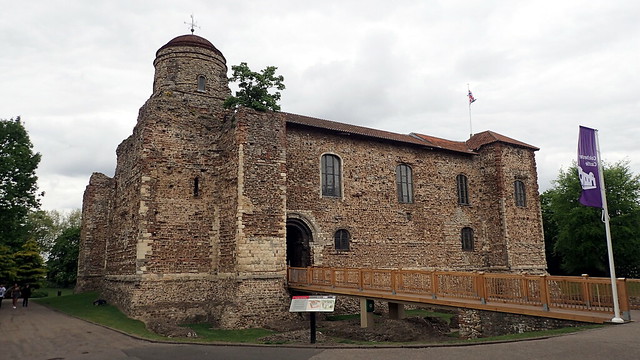
Colchester Castle. Norman medieval, but built directly onto the foundations of the old Roman temple, and recycling much of it's old building material. When the Romans invaded the British Isles in AD 43, they quickly headed for this site. It was an area of importance for the Trinovante tribe. The Romans considered it as the nearest that the South East British had to a Capital City. Claudius followed the crossing with a herd of armoured elephants. He accepted submission here.


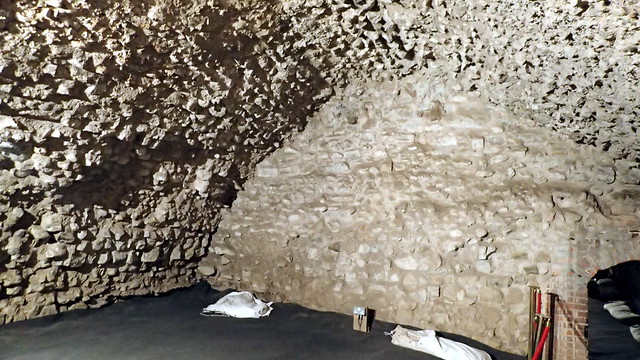
Here I'm in the vaults. These were Roman laid foundations for an enormous temple, built for the late emperor Claudius, who had been deified. A monument to the Roman dominance of Britannia.


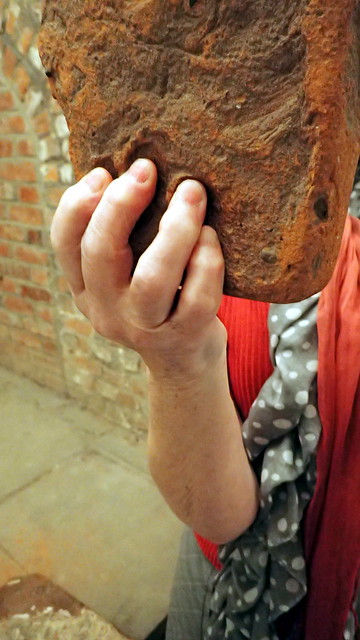
A Roman tile, with finger prints where it was handled still soft.


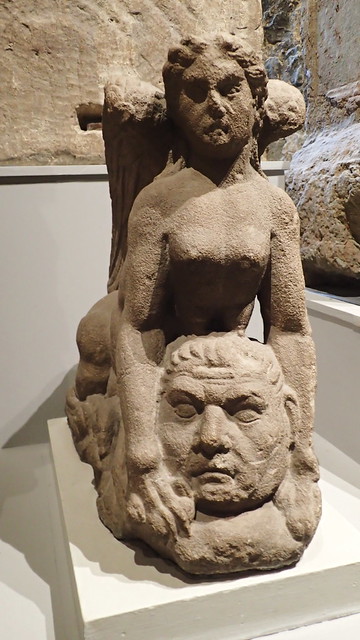
The Colchester "Sphinx".


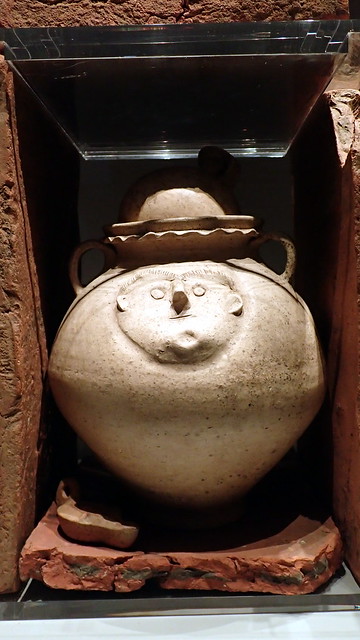
Romano-British smiley on a crematory jar.


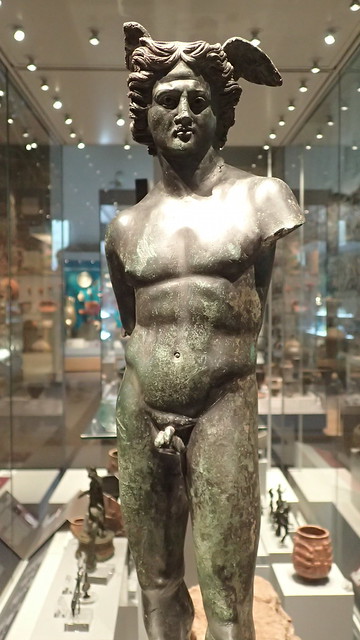
The Colchester Hercules.


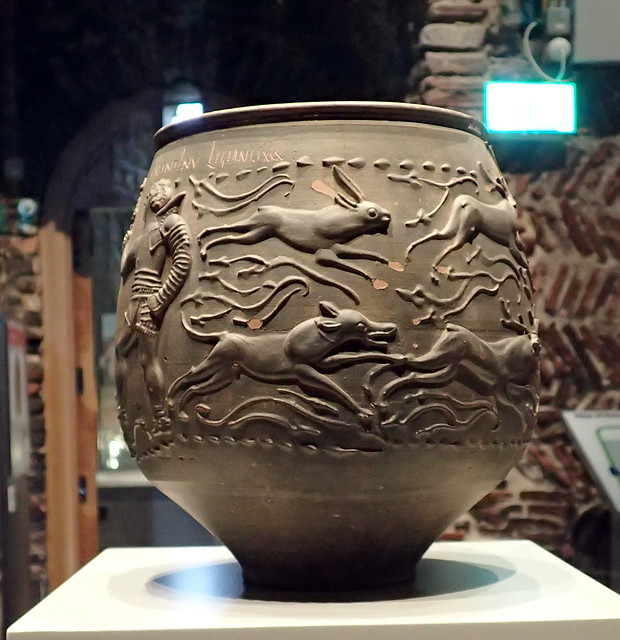
Hunting scenes in ceramic.


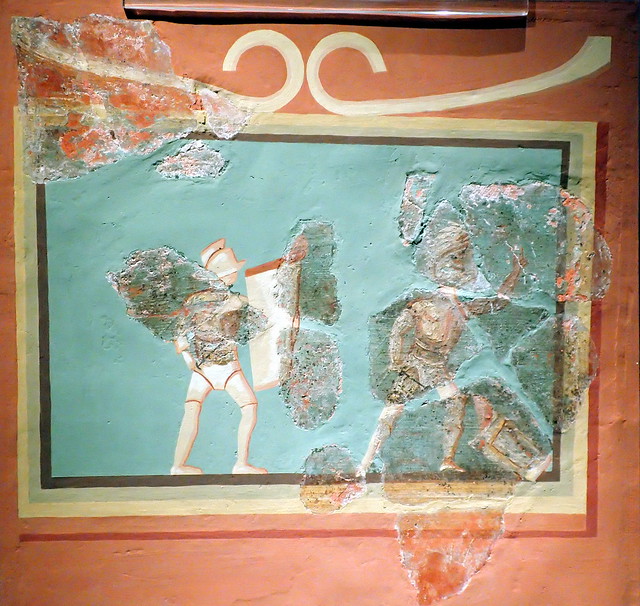
Gladiators at Colchester, Essex.


I'm becoming increasingly interested in shipping and vessels. The North Sea and Channel were bridges rather than walls.


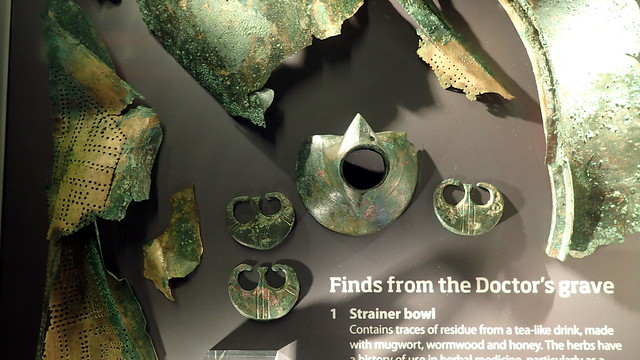
I learned about this one on an archaeology course years ago. The Colchester Roman Doctor's grave. Complete with surgery kit and ... games!


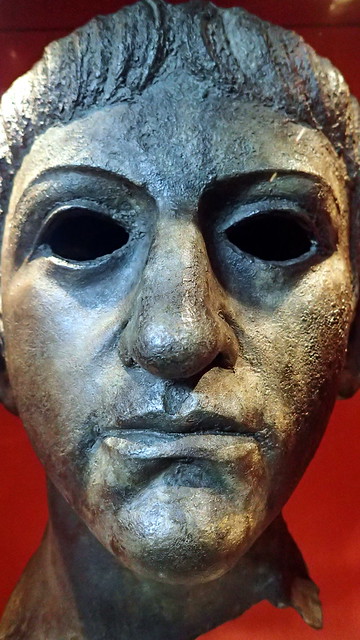
Claudius. Found in a local river. Far too small to have been from the huge bronze effigy that was housed in the temple when Boudicca attacked.


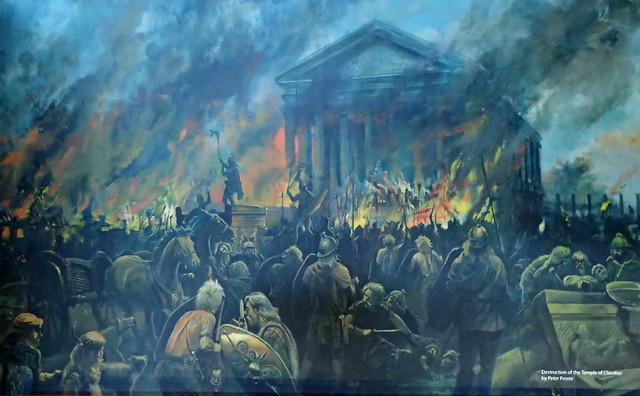
Reconstruction of the Boudiccan siege of the Claudian temple - where the castle was later built, now a museum. Having been beaten, while her daughters were raped, the widow of King Prasutagus of the Iceni (the Iron Age tribe of what is now Norfolk), rose against Rome. Her army stormed down to Colchester. The citizens hid in the temple, which was laid siege for two days, before her warriors broke through and murdered every Roman citizen before burning the town down.


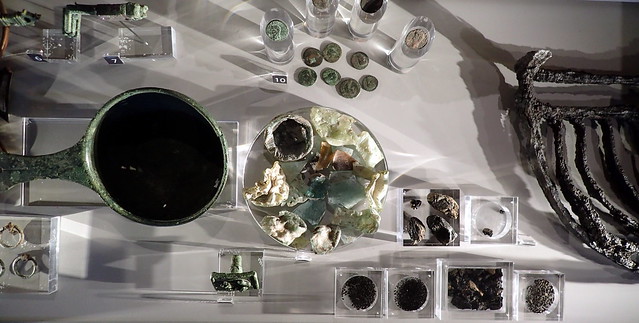
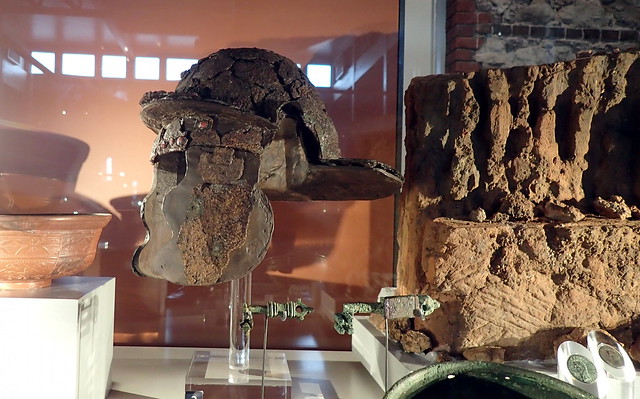
Finds, including molten glass, from the burning of the Roman town by the Iceni led rebels.


More finds from this burning event.


Tombstone of a Roman Legionnaire at Colchester. This one was Thracian, born in what is now Bulgaria. His figure stomping down on a local Briton. This sort of arrogance may have inflamed the rebellion.


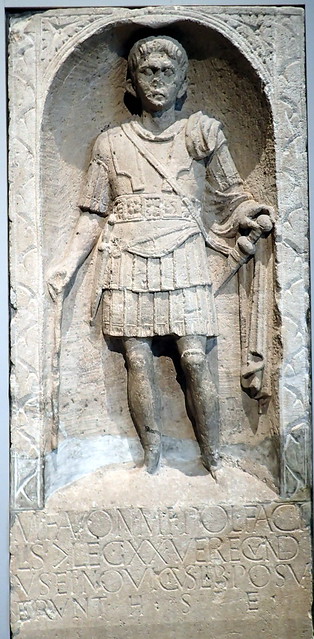
Another soldier's tombstone at Colchester. The town was created as a reward to retiring soldiers, that were granted land in reward for their service to Rome. Colchester today is still a Garrison town.

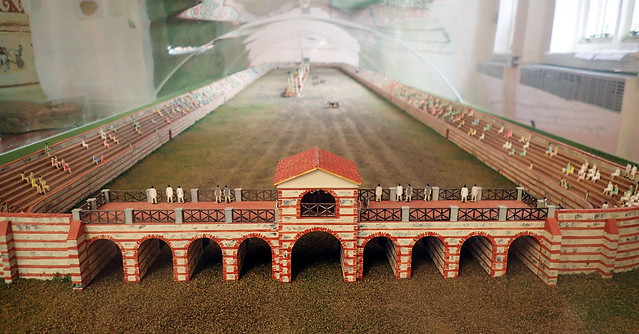
The Colchester Roman Circus

I then walked a mile to the site of a Roman circus.


Model reconstruction.


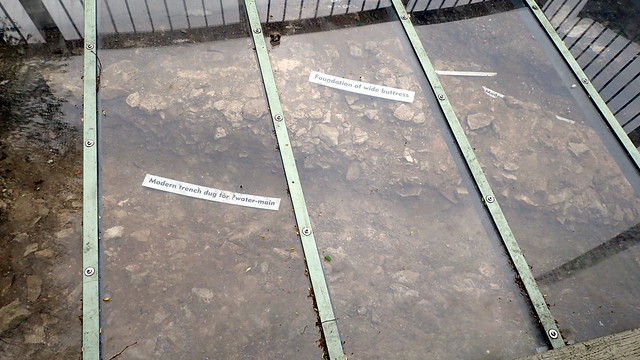
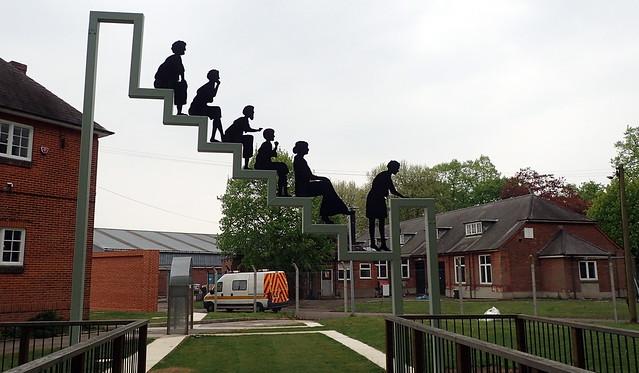
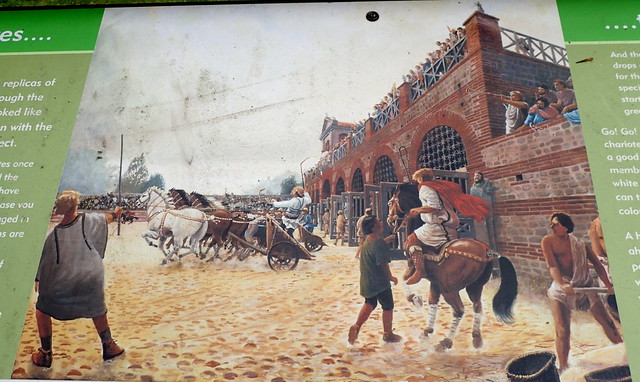
A little exposed archaeology. The circus was discovered close to the modern garrison in recent years, and excavations are ongoing. The only Roman circus so far discovered in the British Isles. A centre of chariot racing. The stands would have held up to 8,000 spectators:


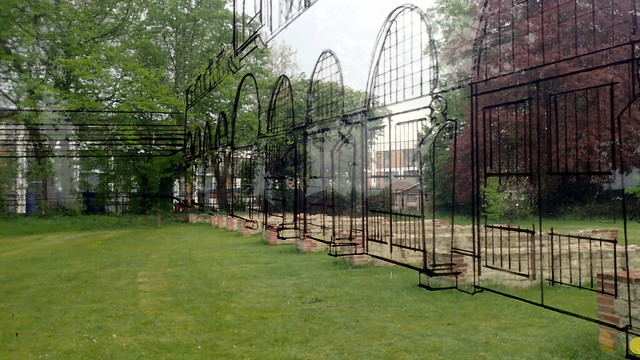
Today, nothing stands above the surface, other than a few reconstructed foundations.


These reconstructions, along with a glass viewing pane invite us to time travel:


In summary, Colchester was indeed an impressive, large town on the edge of the Western Roman Empire. My personal opinion is that population geneticists that dismiss the contribution of RB haplogroups and DNA to the Southern British population should beware.

Tas Valley - Local Day Trip

Another day off from work. I didn't want to go far today, the weather has turned pretty poor for photography and travel. So a couple of very close sites here in Norfolk. According to current genetic studies of the British Isles, the Roman period doesn't seem to have had any noticeable impact on the population genetics of the British Isles. I think that they are missing something.


Venta Icenorum

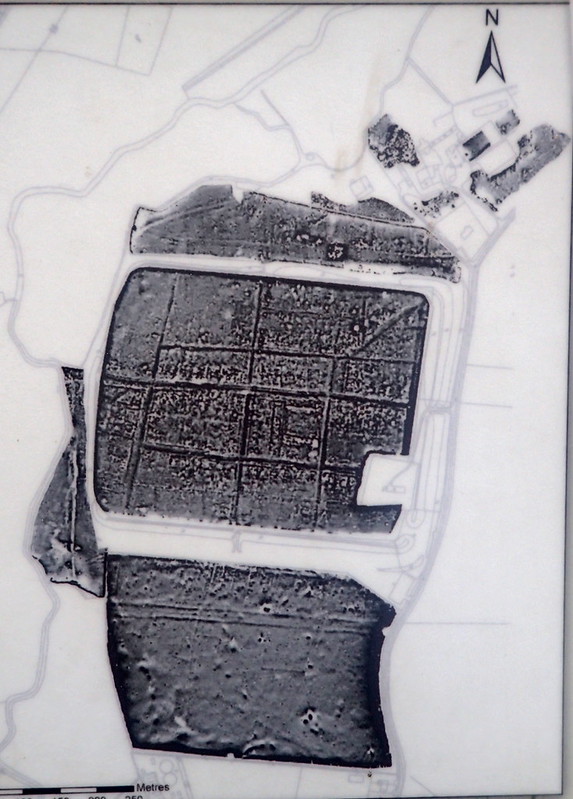
First of all, on the Roman front, I visited the site of the Roman town Venta Icenorum, at Caister St Edmund. A display at the site displays this geophysical display, and the following relief:


Entering the field, this is what it looks like:


Heritage groups have preserved the current site by protecting it from cultivation - hence the sheep. The town sat in the valley of a very small river called the Tas. The site is several miles to the south of it's medieval equivalent, Norwich. Questions are being asked, why was it here? The Romans of course were urban people, that controlled from towns, but why here? It was first laid out as a grand plan some decades after the local Boadiccan Rebellion. No sign of significant Iron Age on the site, but some suggestion of a nearby Roman military encampment.


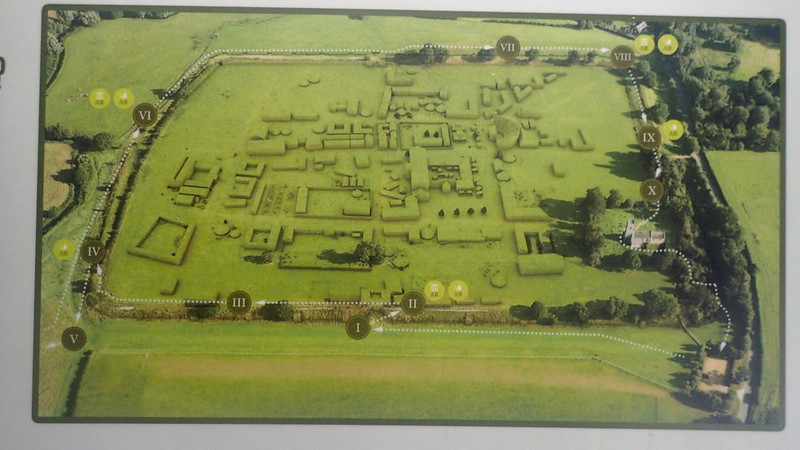
The town has gone, and is best viewed with geophysical maps or by aerial reconnaissance photos. However, it's "defenses" or boundaries are still clearly visible.


The below is a nice feature. A clear perspex panel showing proposed building outlines over the field:


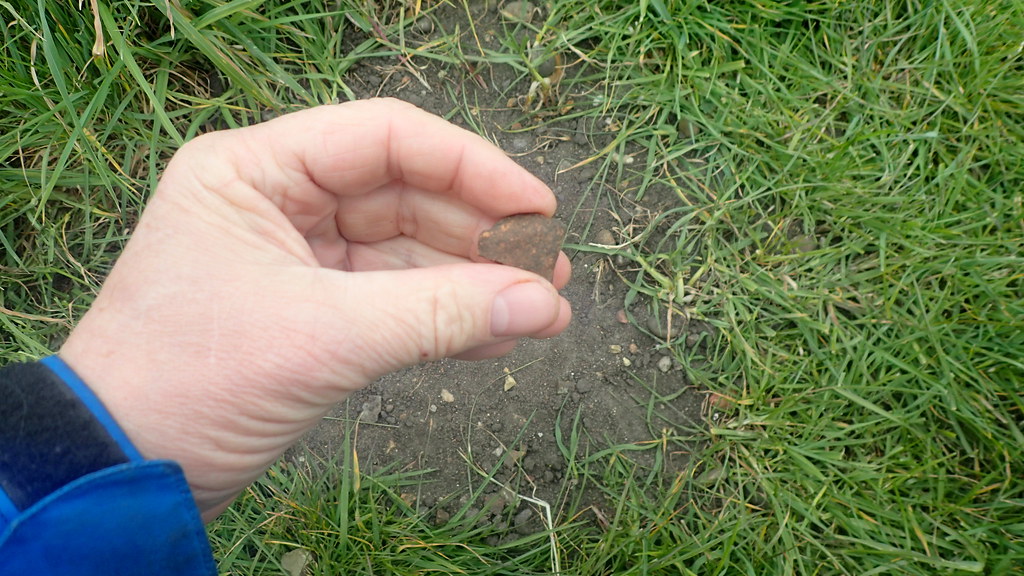
Years ago as I've said before here, I was a very keen voluntary field-walker, or as I'd have preferred "surface collection surveyor". So as I walk across the field, I can't help spotting Roman tile in the mole hills:


The area of Venta Icenorum is very rich in later Anglo-Saxon finds. They do seem to have been attracted to this site, even though the town had long been abandoned before they arrived from the Continent.


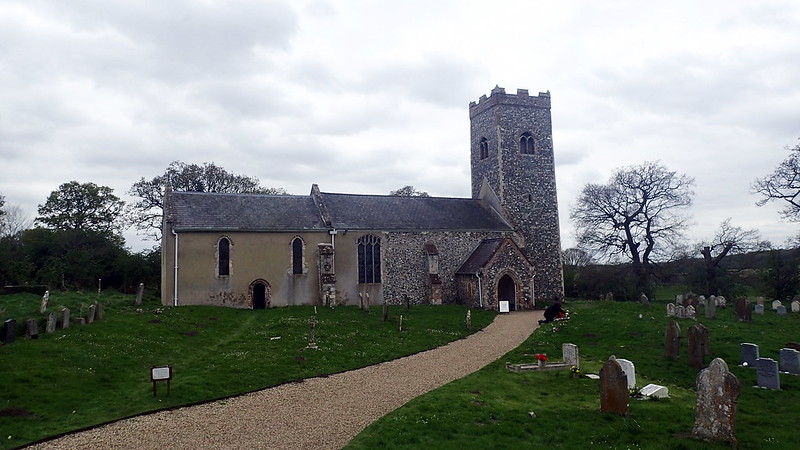
As is very common in both prehistoric, and Roman sites, a medieval church stands within the limits of the site. As a sign of continuity, as a scavenge of building material - but also in order to claim dominion over older beliefs, and a return to civilisation:


I hope that you enjoyed Caister St Edmunds. I still had some time to spare, so I decided to visit a site a few miles to the south in the same Norfolk river valley, that I hadn't visited before:


Tasburgh Enclosure

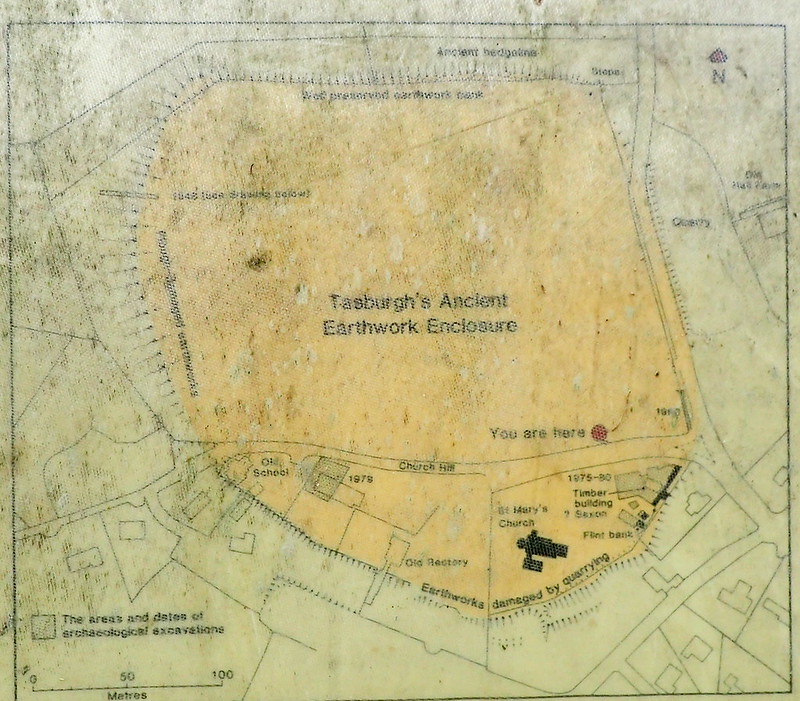
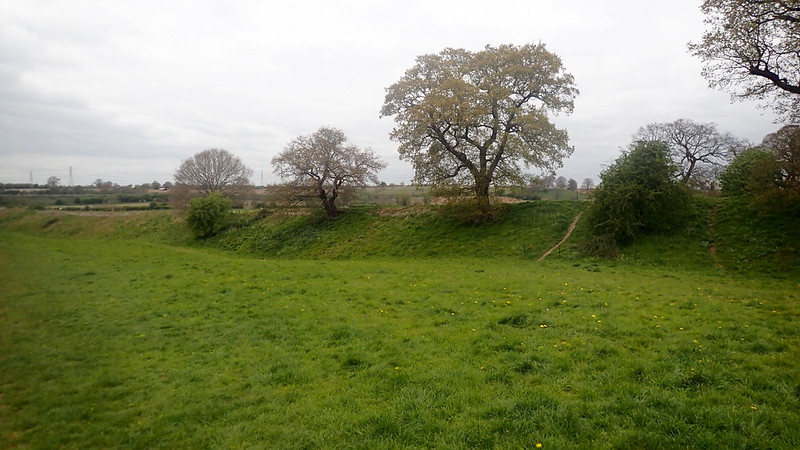
This one is an enigma. An enclosure in Norfolk. I always understood it as an Iron Age Hillfort. The word "hillfort" might not be appropriate in lowland Norfolk, especially as our iron Age enclosures were often in lowland river valleys. Norfolk has a long tradition of "doing different". Excavations have not found Iron Age finds! They have found some evidence of Anglo-Saxon activity, and an opposing hypothesis is that it was a prehistoric enclosure re-used during the wars with the Danes. My personal feeling is that it is late prehistoric, but wait and see - a sign that I found there today seems to suggest some fresh and local based communal research:


A local, rather mucky information board mapping the enclosure:


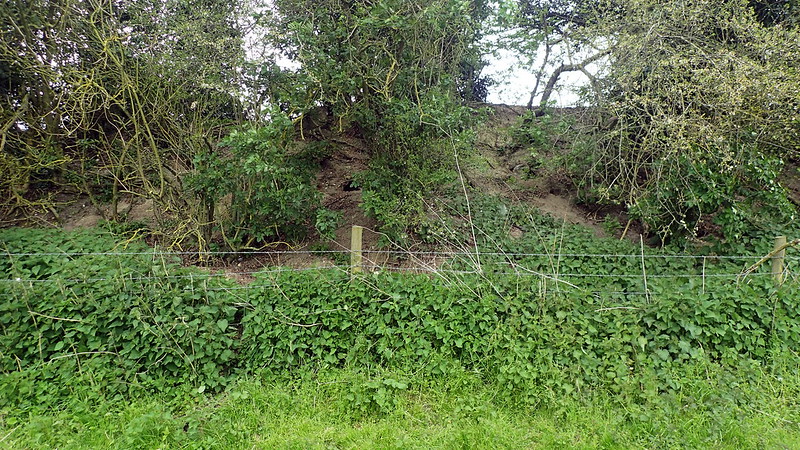
Outside the northern bank:


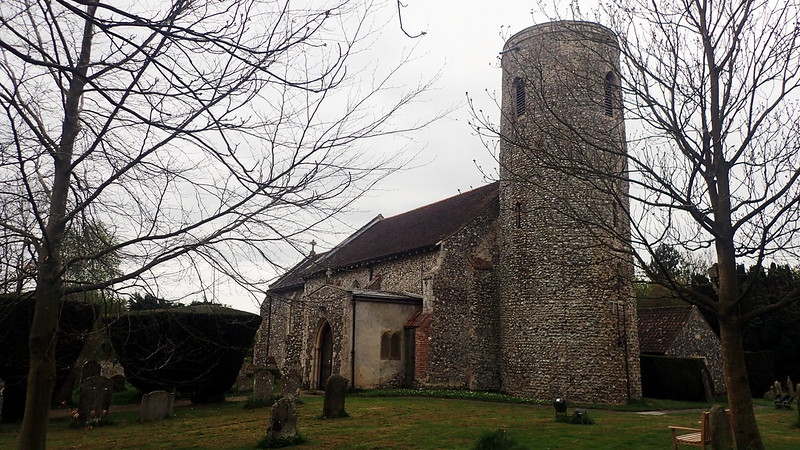
Once again, a medieval church sits inside the enclosure. This one, St Mary's, a classic Norfolk round tower job. I can also boast here, that this is one (there are many) of my own personal ancestral churches on my recorded ancestry. Two of my recorded direct ancestors married there in 1794:


I hope that someone out there enjoys my photo-reports.

What have the Romans done for us?

I can feel Spring in the air.  So, day off from work, I decided to take a field trip.  Wasn't sure where to when I hit the road, but I ended up at Burgh Castle, the ruin of a Roman Fort of the Saxon Shore.

Information board at Burgh Castle.

Traditionally, the Roman Shore Forts of South-East Britain were seen as Late Roman defensive structures, to protect Roman Britain from attack from barbarians from the other side of the North Sea, outside of the Empire.  This remains a valid view, although I remember attending a lecture by a local archaeologist many years ago, that argued that these shore forts, were a little odd.  With civilian activity inside the forts, and not particularly very defensive.  He was arguing that rather than protect Roman Britain from invasion by Anglo Saxon pirates, they were intended to control and tax heavy commerce across the North Sea.  No I'm not going to take sides, perhaps there was an element of both intentions.
I personally also like to see this fort as a sort of 4th Century AD immigration control.  My mother's 18th and 19th Century ancestors are so strongly clustered nearby at the Reedham area, that I can't help but imagine that at least some of her ancestors lived in East Norfolk way back into the medieval, and perhaps some of them rowed passed this recently decommissioned shore fort during the early 5th century AD.  I imagine them jeering at the now abandoned post of the Empire, as they rowed past.  Arriving into Britain, with fealty free land just for the grabbing, a land of opportunity for rural self sustaining farmers from the Continent.

The view down on the Yare and Breydon Water from Burgh Castle.  Much of this would have been flooded during the 4th Century by higher sea levels and the absence of drainage.

From a population genetics point of view, we are usually told that the 360 year long period of Roman Britain contributed little to our present day DNA.  More important was the contribution of the Early Bronze Age, that carried DNA from the Eurasian Steppes, followed perhaps by the Anglo-Saxon / Danish / Norman Medieval immigration events that followed the collapse of shore forts such as this one.  It is usually suggested that because actual migration from Rome was sparse, and troops were scattered from all over the Empire, that there was little impact on the late prehistoric British genome.

However, whenever an odd haplotype turns up in an old British family, including for example, my own Y-DNA that appears to have originated from the area of present day Iran or Iraq, someone will suggest that it could have arrived during the Roman Empire.  Indeed, in some cases they may well have made their way into North west Europe, even to the British Isles during that time.  Trade and exchange across Western Eurasia was thriving.

I give you Burgh Castle, Norfolk.  They may have built it in order to keep some of my ancestors out.