Ovum Act 8 Option A - Anglo-Saxons arrival in Tas Valley, East Anglia. 480 CE

Back to the FutureTime Travel and Haplogroup Index

It is 480 CE. It is spring, and a boat of new immigrants rows past the Roman Saxon Shore fort at Burgh Castle. The few guards stationed within the massive flint walls are remnants of the local limitanei—frontier militia who have transitioned from soldiers to hereditary farmers in the seventy years since Rome withdrew its administration.

Rome no longer holds jurisdiction here; its bureaucracy has evaporated. It no longer controls the sea estuary nor decides who may enter or depart. My hypothetical 55th great-grandmother would have faced no imperial barriers to her immigration to Britannia, passing under the gaze of men whose only authority was the land they stood upon. Perhaps she brings with her our mitochondrial DNA Haplogroup H6a1a8 private variant F8693412?

They have crossed the North Sea, having departed from their homeland near the Lower Elbe and the peninsula of Angeln (within present-day Schleswig-Holstein, Northern Germany). We would identify them as the Angles—the specific ethnic group who were to give their name first to East Anglia, and eventually to the kingdom of England.

Their ancestors lived beyond the frontiers of the Western Roman Empire. Her matrilineage may have migrated northwards from Alpine or Carpathian sources, following the course of the Elbe and passing through the Jastorf cultures before finally reaching the maritime peoples of the North Sea coast. There, amongst the salt marshes and estuaries, her kin merged into a distinct Anglian identity.

Copyright Source © OpenStreetMap contributors.

The drive to leave their homeland in the Angeln peninsula of present-day Schleswig-Holstein was born of necessity. A deteriorating climate and rising sea levels had turned their traditional coastal farms into waterlogged marshes, creating a desperate environmental push. Conversely, the "pull" of Britain was irresistible; it offered a landscape that was geographically familiar yet significantly more fertile. To these opportunists, the crumbling Roman infrastructure represented a vacuum of power rather than a barrier. They saw a land of established fields and abandoned villas where a new life could be carved out, far from the flooding and tribal volatility of the Germanic north.

The arrival of the Anglian immigrants in the Tas Valley circa 480 CE would have been a moment of profound cultural tension and pragmatic negotiation, played out against the backdrop of the decaying Roman regional capital, Venta Icenorum. By this stage, the town’s orderly grid had largely been reclaimed by the landscape, yet its massive stone walls remained a powerful psychological landmark for the Romano-British locals. These inhabitants—descendants of the Iceni who still viewed themselves as part of a Roman world—likely received the newcomers with a mixture of dread and guarded necessity. Lacking a professional military to defend their farmsteads from northern raiders, the locals may have viewed our fictional 55th great-grandmother’s kin not merely as invaders, but as potential mercenaries or protectors to be settled on the periphery of their territory.

The cultural clash between the two groups would have been immediate and visible. The Britons, likely Christian and still clinging to sub-Roman dress and Latinate customs, would have stood in sharp contrast to the Germanic-speaking Angles, who arrived with their pagan traditions, distinctive cruciform jewelry, and handmade stamped pottery. However, archaeology suggests that this was a period of wary coexistence rather than immediate total conquest. The Angles did not sack the ruins of the town but instead established a "shadow" settlement on the outskirts, utilizing the Roman roads and the river access while maintaining their own traditional timber halls.

Ultimately, the reception in the Tas Valley represented the final, fading heartbeat of Roman authority. The presence of the vast Anglo-Saxon cemetery just outside the walls of Caistor St Edmund indicates that the demographic balance was shifting rapidly. As the Anglian families grew in number and influence, their robust, self-sufficient social structure began to overwhelm the fragmenting Romano-British society. For the locals, the choice was one of gradual integration or retreat, as your ancestor’s people transitioned from being guests on the edge of a ruined city to becoming the new masters of the East Anglian heartland.

Drawing upon the experimental archaeology at West Stow, Suffolk, the primary dwelling our hypothetical ancestors would have constructed upon settling in the Tas Valley was the Sunken-Featured Building, or Grubenhaus. Far from the primitive "pit-houses" once imagined by early historians, these structures were sophisticated domestic units perfectly adapted to the post-Roman landscape. The defining characteristic was a rectangular pit dug into the sandy soil, which served not as a living floor, but as a ventilated air space beneath a suspended timber platform. By supporting the living area above the ground, this design provided crucial insulation and protected the inhabitants from the dampness of the East Anglian earth. Two or three substantial oak posts supported a central ridge pole, upon which rested a steeply pitched roof of water reed or straw thatch that reached nearly to the ground, creating a compact and thermally efficient environment.

Within these thatched dwellings, daily life was dictated by the functional versatility of the space. While they served as primary residences for some, many functioned as specialized craft huts where the naturally humid air trapped beneath the floorboards served a vital purpose. This humidity prevented woollen threads from becoming brittle, making the Sunken-Featured Building the ideal setting for the vertical warp-weighted looms used to produce the tribe's textiles. These buildings were organic and ephemeral; when the timbers eventually succumbed to rot, the community would simply backfill the hollow and erect a new structure nearby, leading to a shifting settlement pattern that contrasted sharply with the fixed masonry of the nearby Roman ruins. For a woman such as our 55th great-grandmother, the construction of these buildings marked the successful transplantation of a continental architectural tradition into the British soil, providing a familiar and self-sufficient home in an uncertain new world.

By 500 CE, the sharp ethnic boundaries of the initial migration had begun to soften into a complex, "hybrid" reality. As Robin Fleming highlights in her work Britain After Rome, the collapse of the Roman state was not just a political failure but a total breakdown of the systems that told people who they were. In this vacuum, identity became something negotiated at the local level, often over the hearth or through the joining of families.

The wedding of a Romano-British bride to a pagan Anglian groom in the Tas Valley would have been a vivid tableau of this social restructuring. For the bride’s father, a man perhaps still clinging to the memory of Roman civitas, the union was likely a pragmatic strategy for survival. By giving his daughter to an Anglian house, he was securing a "blood-bond" with the new military elite who now controlled the flow of grain and the safety of the roads. This was not necessarily a story of romantic integration, but of social re-calibration; the bride’s family provided the local knowledge and agricultural roots, while the groom’s kin provided the protection and the fresh, robust social structure of the comitatus (warband).

Robin Fleming argues that we should look less at "tribes" and more at the re-ordering of daily life. In such a household, the material culture would have become a "creole" of traditions. The bride might have continued to wear a sub-Roman tunic and perhaps a small, hidden lead cross, while her husband displayed the cruciform brooches and great-square-headed fasteners of his Anglian heritage. Their children would grow up in a world where the distinction between "Roman" and "Angle" was increasingly blurred. They might speak a Germanic tongue to their father and a Latinate-influenced Brittonic to their mother, eventually forging the early Old English language.

This "admixing" was the true crucible of the English identity. It was a process of bricolage, where people took the shattered pieces of the Roman past and the raw materials of the Germanic present to build something entirely new. By 500 CE, the Tas Valley was no longer a Roman territory under occupation, nor was it a purely Germanic colony; it had become a frontier zone where the "Roman" was being slowly digested by the "English," creating a society that was tougher, more localized, and ultimately more resilient than the imperial system it replaced.


This union also represents the end of this division between Option A and Option B movement of our mtDNA H6a1a8 matrilineage into Norfolk, East Anglia. Our mother-line has finally arrived in Britain, whether prior to Roman Britain (Option A), or here after its collapse (Option B). The narrative will now move on forward through medieval and modern Norfolk, England to reach our genealogically recorded direct maternal lineage with the baptism of Anne Carter at Carleton Rode, Norfolk, in 1661 CE

GO TO NEXT ACT - Later Medieval, Black Death. South Norfolk. 1349 CE

Back to the Future: Time Travel and Haplogroup Index

Odyssey of Y Act 8 - Option A Severan Bureaucrat, Romans in Londinium 230 CE

Back to the FutureTime Travel and Haplogroup Index

My yDNA follows the path: L-M20 > M22 > M317 > SK1412 > SK1414 > FGC51041 > FGC51088 > FGC51036. I have been posting episodes detailing events that could have occurred during its 25,000-year journey of development. I traced a journey from its roots in the Zagros and Caucasus mountains to the Levant, culminating in a fictional temple treasurer of Byblos in 64 BCE.

From that point, I have developed two competing hypotheses regarding its leap to the open-field systems of Berkshire. Option A represents the Early Migration or Roman Empire route. In this scenario, my lineage migrates to Londinium, Britannia, via the Romano-Greek colony of Patras and Rome itself, between 180 CE and 205 CE.


A fictional descendant of Phoenician temple treasurers in Byblos had outgrown his Levantine homeland. Seizing the opportunities offered by the Roman Empire, he first relocated to the Greek colony of Patras (Achaia) to bolster his bureaucratic credentials. There, he married a daughter of his Romano-Greek patrons before travelling to Rome itself to receive a new commission.

Septimius Severus (reigned 193–211 CE) was eagerly recruiting administrators from the East to dismantle the entrenched autocracy within his empire. Our ancestor, Aurelius, was keen to advance his career. Yet, once in Rome, he found the appointment to be a formidable challenge—not only for himself but also for his wife and daughter. The posting was Britannia.


The Gateway of Londinium

Home became a town house near the Walbrook stream, a short distance from the massive stone quays of the Thames. To Aurelius’s Greek wife, the docks were a cacophony of damp timber and salted fish—a far cry from her warm home in Achaia. To Aurelius, however, they were his lifeline.

Under Septimius Severus, the province was being transformed into a supply base for the Emperor’s planned campaigns in the North. Aurelius’s days were spent at the Forum, the largest building of its kind north of the Alps, overseeing the arrival of Spanish oil, Gaulish wine, and the local grain destined to feed the legions at Eboracum (York).

On the Road: The Procurement Trail

Aurelius’s duties took him away from the comforts of the capital and onto the straight, paved arteries of Watling Street and the Ermine Way. His task was the annona militaris—the requisitioning of supplies for the army. In the South and East, he met with local civitas leaders; men who styled themselves as Roman senators but still spoke with the lilt of the Belgae or the Iceni. In the ‘palace’ at Fishbourne, he negotiated with regional administrators who were eager to prove their loyalty to the new African Emperor.

The era of independent British kings was largely over, yet the chieftains still held sway over the rural populations. Aurelius had to be a diplomat; he needed their cattle, their leather for tents, and their lead from the Mendip Hills. He carried the authority of an emperor who did not care for tradition. If a local magistrate grumbled about the grain tax, Aurelius reminded them—perhaps with a touch of Levantine wit—that Severus rewarded loyalty but had little patience for the ‘old ways’ of the Italian elite.

The Domestic Struggle

The ‘great challenge’ he had feared in Rome manifested in the small details of daily life. He likely spent a fortune on hypocaust heating, burning endless cords of wood to keep his growing family warm during the ‘perpetual mist’ of the British winter. Whilst he could procure the finest Mediterranean imports for the Governor’s table, his own family had to adapt to local butter instead of olive oil, and the heavy, hopped ales of the North instead of the sweet wines of Achaia.

A Man of Two Worlds

Aurelius was a ‘Severan Man’—a product of a meritocratic, globalised empire. In the morning, he might have offered incense to Mithras or the Syrian Goddess in a small shrine by the London docks; in the afternoon, he was a cold-eyed bureaucrat calculating the weight of British wool.

He was the bridge between the ancient traditions of the East and the raw, developing frontier of the West. He was not just living in Britain; he was building the Roman machinery that kept it pinned to the map of the world.


In 235 CE, on the docks of Londinium, Aurelius heard the news: the assassination of Alexander Severus.

In March of that year, the last of the Syrian line, Alexander Severus, had been murdered by his own troops at Mogontiacum (Mainz, Germany). He was killed alongside his mother, Julia Mamaea—the woman who had effectively governed the Empire. For Aurelius, this was the death of his patron. The new Emperor, Maximinus Thrax, was a career soldier who had risen from the ranks; he had no use for the sophisticated ‘Eastern’ civil administrators favoured by the Severans. To the new regime, men like Aurelius were viewed as ‘palace softies’ who had drained the treasury on bureaucracy rather than the army.

The shift would have been felt instantly in Londinium. Aurelius gathered his family—which now included two daughters and a younger son. They were in grave danger. His only advantage was being among the first to receive the news at the quayside. He acted quickly before his property could be confiscated. Prepared for such a crisis, Aurelius had already formulated an emergency plan: an escape up the Thames with his wealth to a refuge he had kept secret.

Aurelius Belicatus (the son) By 250 CE, Aurelius the senior had passed away, succeeded by his son, Aurelius Belicatus, as head of the household. The farmstead was now developing into a respectable villa. He had married a young, local British wife.


The lineage remained, surviving into the mid-18th century as copyhold tenants. No longer following the imperial bureaucratic rules of movement, the paternal line now adhered to an agricultural rule of stability.

In the villages of the Thames Valley, across the borders of Berkshire and Oxfordshire, the family held their place not by deed, but by the "custom of the manor". Their names were etched into the manorial court rolls, securing their right to the land through generations of quiet husbandry. The ancient Levantine heritage, once carried by soldiers or traders across vast distances, was now tethered to a few acres of English soil—preserved by the very permanence of the feudal tradition.


With each passing generation, the lineage becomes increasingly British, then more specifically English. Few would ever guess at the ancient Asian heritage encoded within the nucleotides of the Y-DNA. That a line of descent has its roots in the Zagros Mountains, and later among the Hurrians and Phoenicians, could remain forgotten for over 1,700 years.

Whether one prefers the "Early Migration" theory or the "Late Migration" narrative—centred on late-medieval Venetian galleys—the genetic reality remains the same. We know that Y-DNA L-M20 > M22 > M317 > SK1412 > SK1414 > FGC51041 > FGC51088 > FGC51036 originated in Western Asia (most likely the Zagros or South Caucasus). It likely moved into the Levant, where it persisted as an uncommon, narrow "ghost" haplogroup. Eventually—whether in antiquity or more recently—it reached Southern Britain, where it remains incredibly rare today.

GO TO NEXT ACT - Option A. Medieval Thames Valley villeins. 1432 CE


Back to the Future: Time Travel and Haplogroup Index

Ovum Act 8 Option B. The Last of the Romano-Britons and the first Anglians. East Anglia 440 CE

Back to the FutureTime Travel and Haplogroup Index

It is now 440 CE in the Tas Valley of what is now called Norfolk, England. My 51-times great-grandmother is a young girl, playing in the ruins of the old city of Venta Icenorum. Other than squatters and salvage-hunters, the city has largely fallen into decay and is mostly deserted.

Her people are Romanistas - Romano-Britons. They are the Christian, Romanised Britons of the 5th century, and they have good reason to pray. It has been more than thirty years since the last legions departed Britannia. The shore forts stand derelict. The economy is in crisis, and their society is shattered.

Her father is a decurion, a local magistrate and landowner. He has witnessed the decline throughout his life. His tenants are restless, their economy still clinging to the memory of the coin, yet they scratch the heavy local soils with light ards that barely bite the earth.

​But a new people are settling these lands, arriving from across the North Sea. Their culture is alien, having evolved free of imperial history. They are industrious workers and brave warriors. They use heavy iron-shod ploughs and brute strength to turn the stubborn clay soils. They rely on barter and tender—trading their surplus products rather than coinage.

​The father is wise. He understands the value of cultivating a strong relationship with these new tenants, mercenaries, and trading partners. They may speak in rough Germanic tongues and worship pagan deities, but they promise a way out of the crisis. These are the early arrivals of a people known as the Angles. They have arrived as mercenaries and pioneers, and have brought a dearth of brides. My 51-times great-grandmother was always destined for an arranged marriage.

Her father had made a wise decision. Her husband's family proved they knew how to get the best out of these difficult soils. Their imported culture inspired the local Romano-Britons; by leading through example, they became the new leaders of the valley.

This AI image visualises the aging couple. They sit at home in a comfortable Anglo-Saxon house. I've asked for a cross section to demonstrate the earth pit basement below the wooden floor. These features left archaeological traces known as SFB (sunken feature building).

My 51-times great-grandmother practices the funerary rites for her husband. The transformation is complete. She began life British, in the Romano-British culture, and ends it English, immersed in the Anglo-Saxon culture.

​Cultures often change, but those who work the soil frequently remain. This underplayed rule applies more so to the women—a rule that can be observed through the mtDNA record.

Rationale

​Recent genomic studies—most notably the 2022 Gretzinger et al. study—suggest a significant genetic turnover in Eastern England, with up to 74% of the ancestry in areas like Norfolk being attributed to Continental Northern European populations.

​At first, this sounds like support for the old 'mass Anglo-Saxon invasion' story of Hengist and Horsa. However, the researchers stress that this immigration event was spread over as much as 600 years, from the early mercenaries up to and including the 9th and 10th-century Danish (Viking) farmers. This represents a long, drawn-out North Sea Immigration Continuum.

​Therefore, integration was often a more peaceful process, occurring one generation at a time. It is easy to see the economic advantage of marrying into North Sea communities. Was there conflict and coercion? I am sure some existed; horror stories based on fact likely served the tabloid-like religious lessons of early monastic historians like Bede.

​These new arrivals—the 74% of East Anglians who conquered the boulder-clay soils—were certainly prominent among my general ancestry. Their mixed descendants, the founders of an English identity, settled in their farmsteads, largely unmoved by the later Norman aristocracy, eventually becoming my high medieval ancestors.

Anglo-Saxon DNA

I have previously blogged details and a summary of recent investigations into Anglo-Saxon DNA in Anglo-Saxon Migration - the latest genetic evidence 2024

Anglo-Saxon copper-alloy brooches, parts of a cruciform brooch or a square-headed brooch recovered by my late father in a field at Morley St Botolph, Norfolk (recorded).

The two options of this early route into Britain (B), and a later Anglo-Saxon entry into Britain (A), now rejoin as we approach the written record.

GO TO NEXT ACT - Late Medieval South Norfolk and the Black Death. 1349 CE


Back to the Future: Time Travel and Haplogroup Index

Roman Colchester

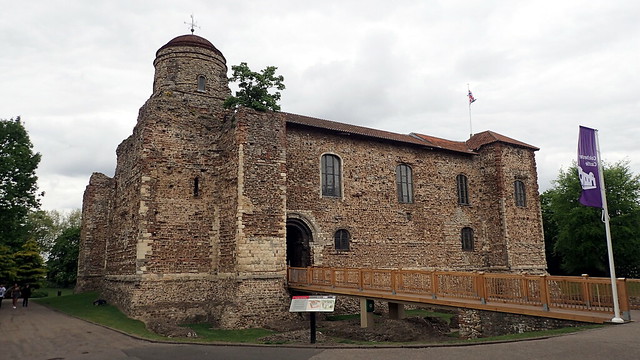
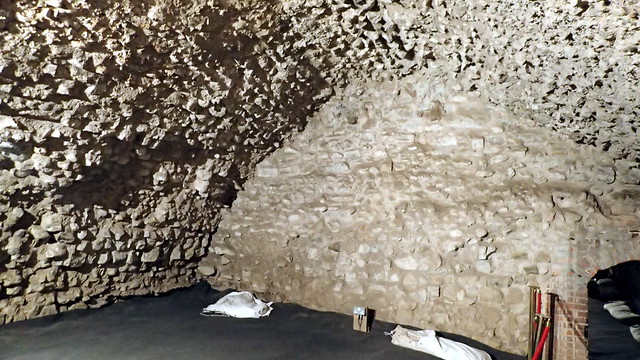
Another of my day trips. Another day off. As a Norfolk bloke, I almost felt as though I was following in the footsteps of the Iceni during the Boudiccan Uprising. I had a good day. One to one tour of the Roman vaults of the old Claudian temple. Here are my photos.


Colchester Castle. Norman medieval, but built directly onto the foundations of the old Roman temple, and recycling much of it's old building material. When the Romans invaded the British Isles in AD 43, they quickly headed for this site. It was an area of importance for the Trinovante tribe. The Romans considered it as the nearest that the South East British had to a Capital City. Claudius followed the crossing with a herd of armoured elephants. He accepted submission here.


Here I'm in the vaults. These were Roman laid foundations for an enormous temple, built for the late emperor Claudius, who had been deified. A monument to the Roman dominance of Britannia.


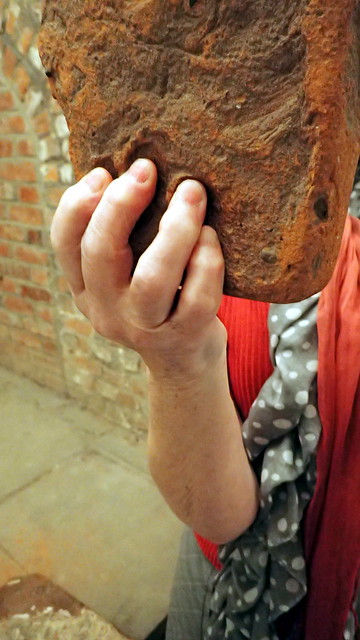
A Roman tile, with finger prints where it was handled still soft.


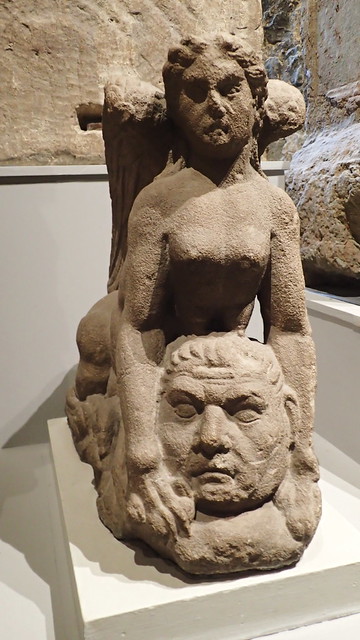
The Colchester "Sphinx".


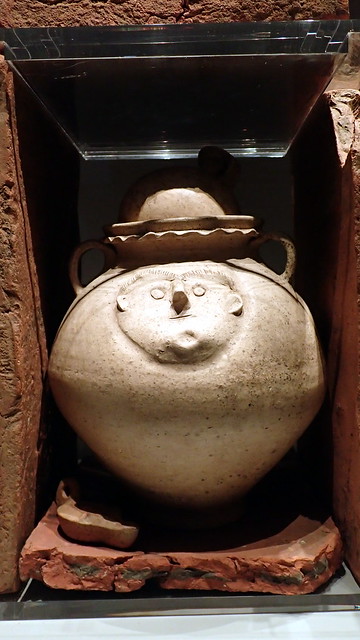
Romano-British smiley on a crematory jar.


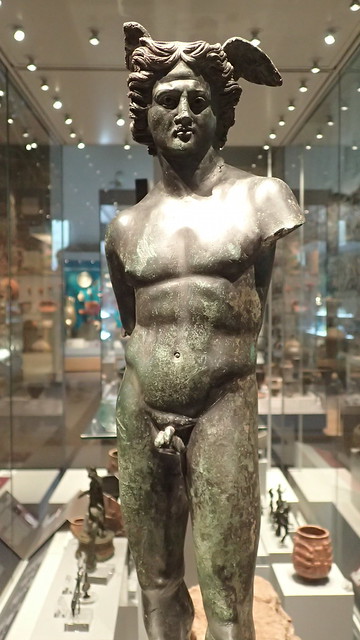
The Colchester Hercules.


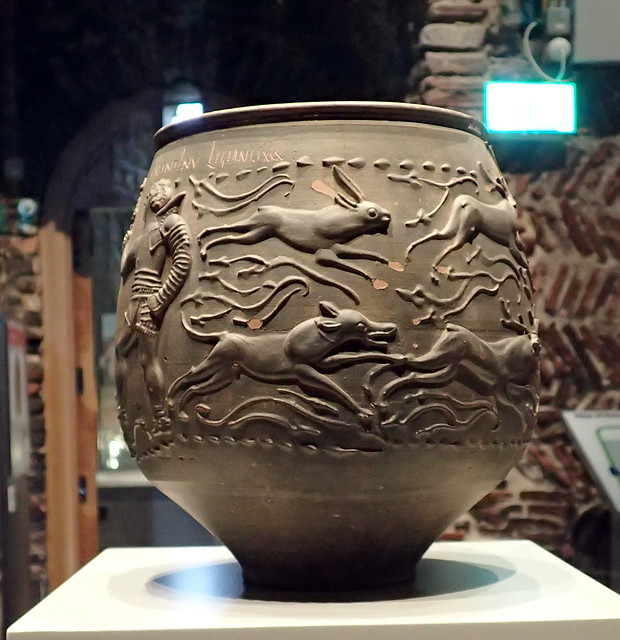
Hunting scenes in ceramic.


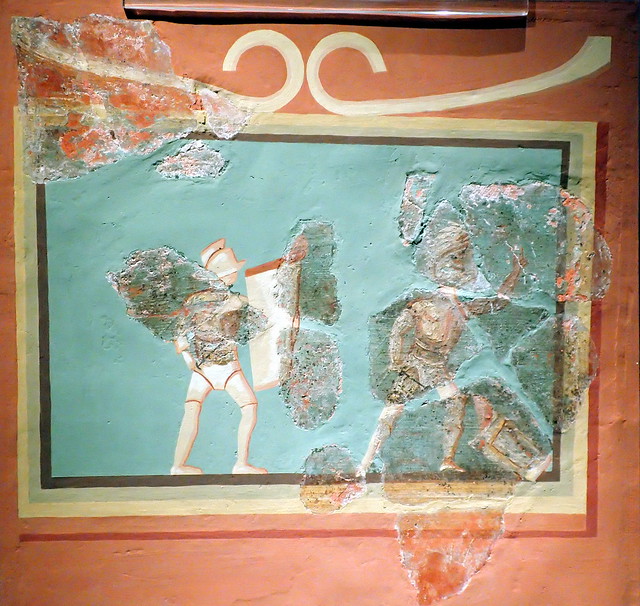
Gladiators at Colchester, Essex.


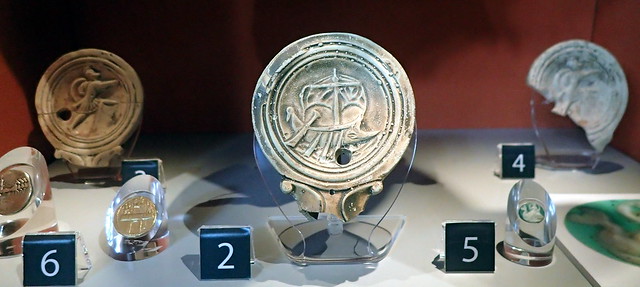
I'm becoming increasingly interested in shipping and vessels. The North Sea and Channel were bridges rather than walls.


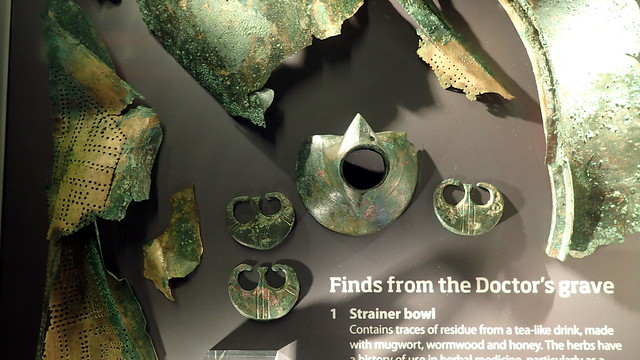
I learned about this one on an archaeology course years ago. The Colchester Roman Doctor's grave. Complete with surgery kit and ... games!


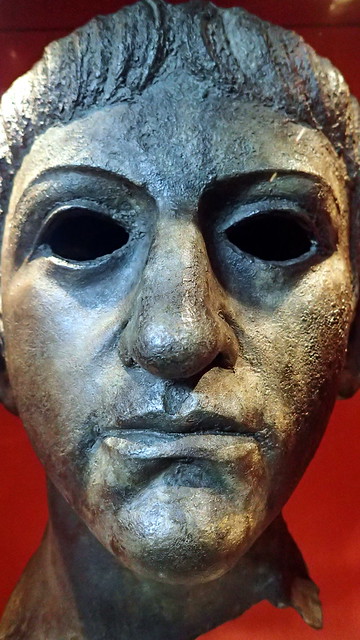
Claudius. Found in a local river. Far too small to have been from the huge bronze effigy that was housed in the temple when Boudicca attacked.


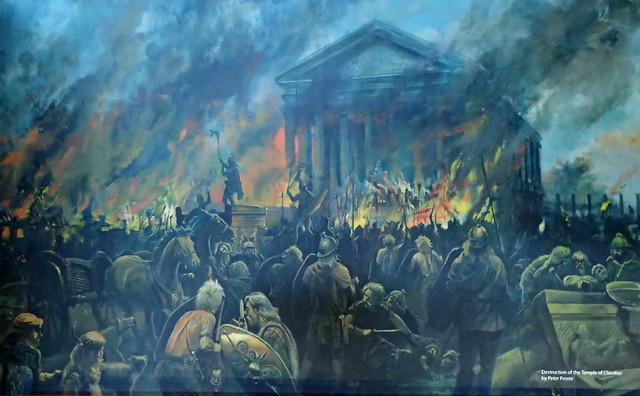
Reconstruction of the Boudiccan siege of the Claudian temple - where the castle was later built, now a museum. Having been beaten, while her daughters were raped, the widow of King Prasutagus of the Iceni (the Iron Age tribe of what is now Norfolk), rose against Rome. Her army stormed down to Colchester. The citizens hid in the temple, which was laid siege for two days, before her warriors broke through and murdered every Roman citizen before burning the town down.


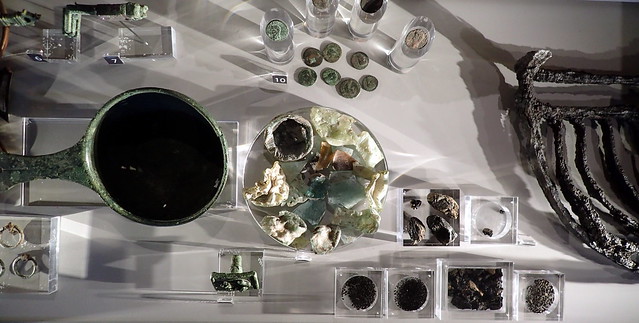
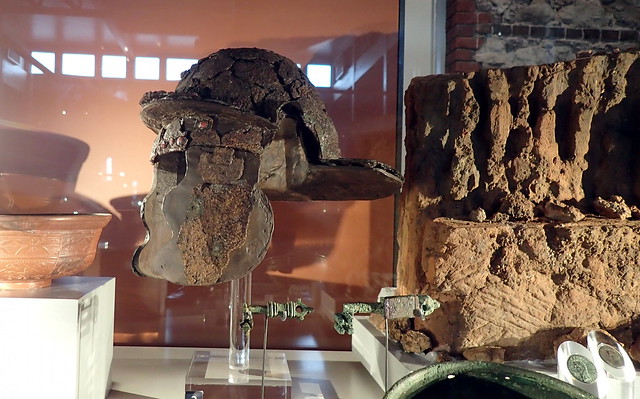
Finds, including molten glass, from the burning of the Roman town by the Iceni led rebels.


More finds from this burning event.


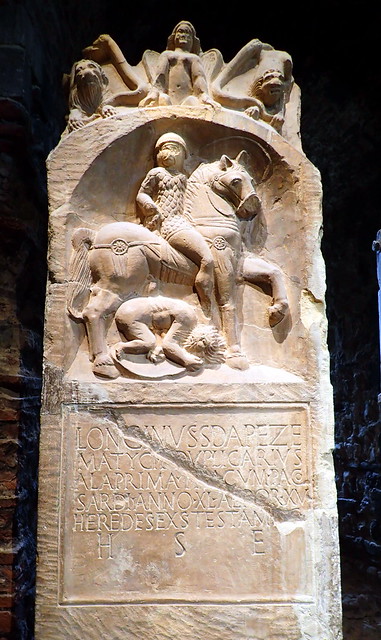
Tombstone of a Roman Legionnaire at Colchester. This one was Thracian, born in what is now Bulgaria. His figure stomping down on a local Briton. This sort of arrogance may have inflamed the rebellion.


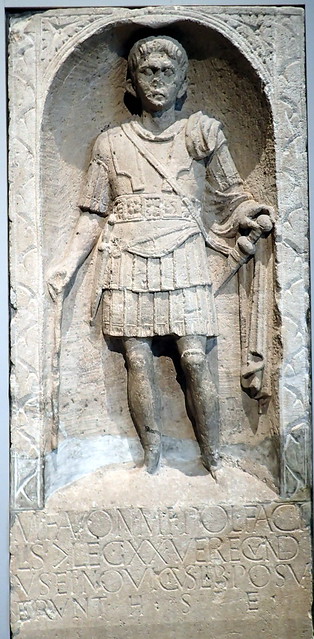
Another soldier's tombstone at Colchester. The town was created as a reward to retiring soldiers, that were granted land in reward for their service to Rome. Colchester today is still a Garrison town.

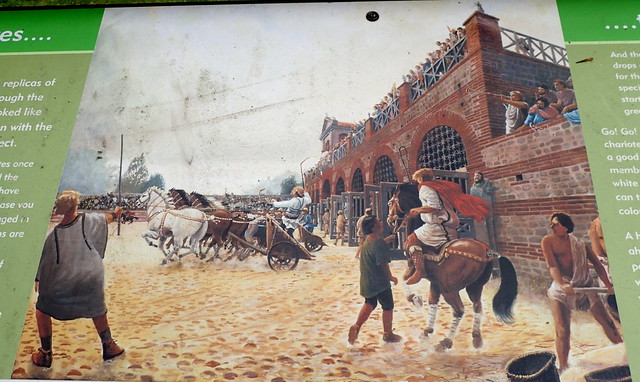
The Colchester Roman Circus

I then walked a mile to the site of a Roman circus.


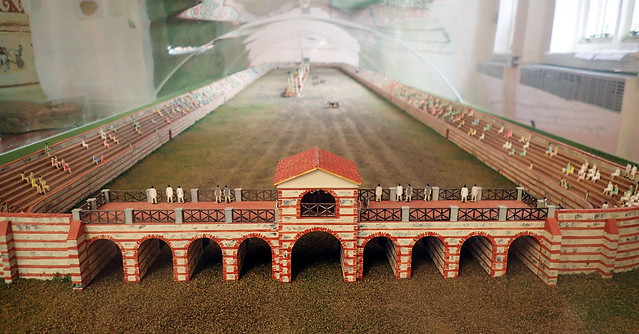
Model reconstruction.


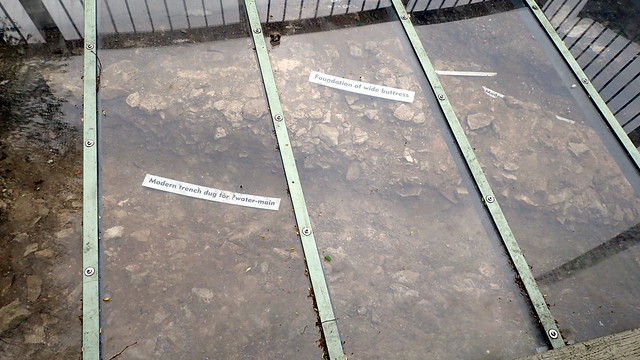
A little exposed archaeology. The circus was discovered close to the modern garrison in recent years, and excavations are ongoing. The only Roman circus so far discovered in the British Isles. A centre of chariot racing. The stands would have held up to 8,000 spectators:


Today, nothing stands above the surface, other than a few reconstructed foundations.


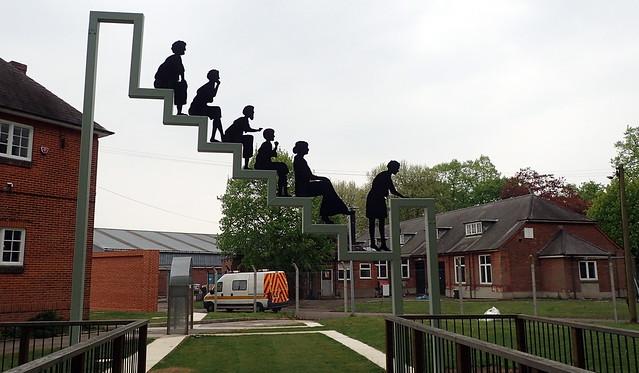
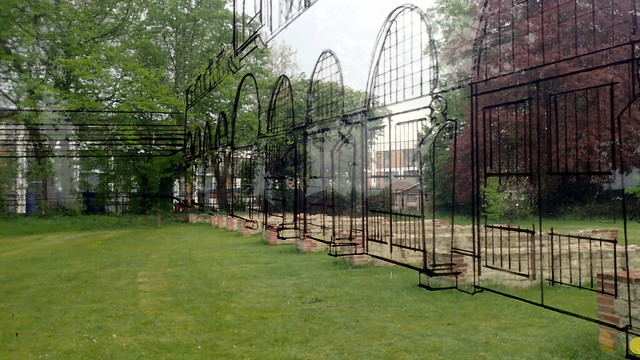
These reconstructions, along with a glass viewing pane invite us to time travel:


In summary, Colchester was indeed an impressive, large town on the edge of the Western Roman Empire. My personal opinion is that population geneticists that dismiss the contribution of RB haplogroups and DNA to the Southern British population should beware.